Birkenstock Arizona Review 2026: Still Worth It?
The Birkenstock Arizona has survived every trend cycle since 1973. It shows up on construction sites, in yoga studios, on fashion runways, and on hospital floors. In 2026, the two strap sandal is still one of the most purchased footwear items in the world. But popularity does not always mean quality.
I bought a pair with my own money, wore them for months, and tracked every blister, scuff, and compliment.
This review covers the real fit, the awkward break in phase, the footbed options, the sizing traps, and the things Birkenstock gets wrong. No marketing language. Just an honest look at whether the Arizona deserves your money this year.
Key Takeaways:
- Comfort arrives late, not early. The cork latex footbed feels hard and strange for the first two weeks. After roughly 20 to 30 hours of wear, it molds to your arch and heel. That delay surprises most first time buyers.
- Sizing runs large and uses EU numbers only. You must measure your foot in centimeters before ordering. A US size 9 woman usually takes EU 40. Guessing leads to returns.
- Build quality in 2026 is good but less consistent than a decade ago. Some pairs arrive with uneven glue lines or crooked logo stamps. Most are fine. A few are not.
- The footbed choice matters more than the color. The regular footbed gives firm support. The soft footbed adds a foam layer for people with sensitive feet.
- Repairability is the hidden value. Birkenstock resoles and rebuilds worn pairs, so a single sandal can last eight years or longer with care.
- They fail in rain, mud, and water. Cork and suede hate moisture. Do not wear leather Arizonas to the beach.
Birkenstock Arizona Overview: What You Actually Get

Last update on 2026-11-12 / Affiliate links / Images from Amazon Product Advertising API Some of the links on this website are affiliate links, which means that at no additional cost to you, I earn a commission if you click through and make a purchase. I only recommend products and services that I believe will add value to my readers. Thank you for your support!
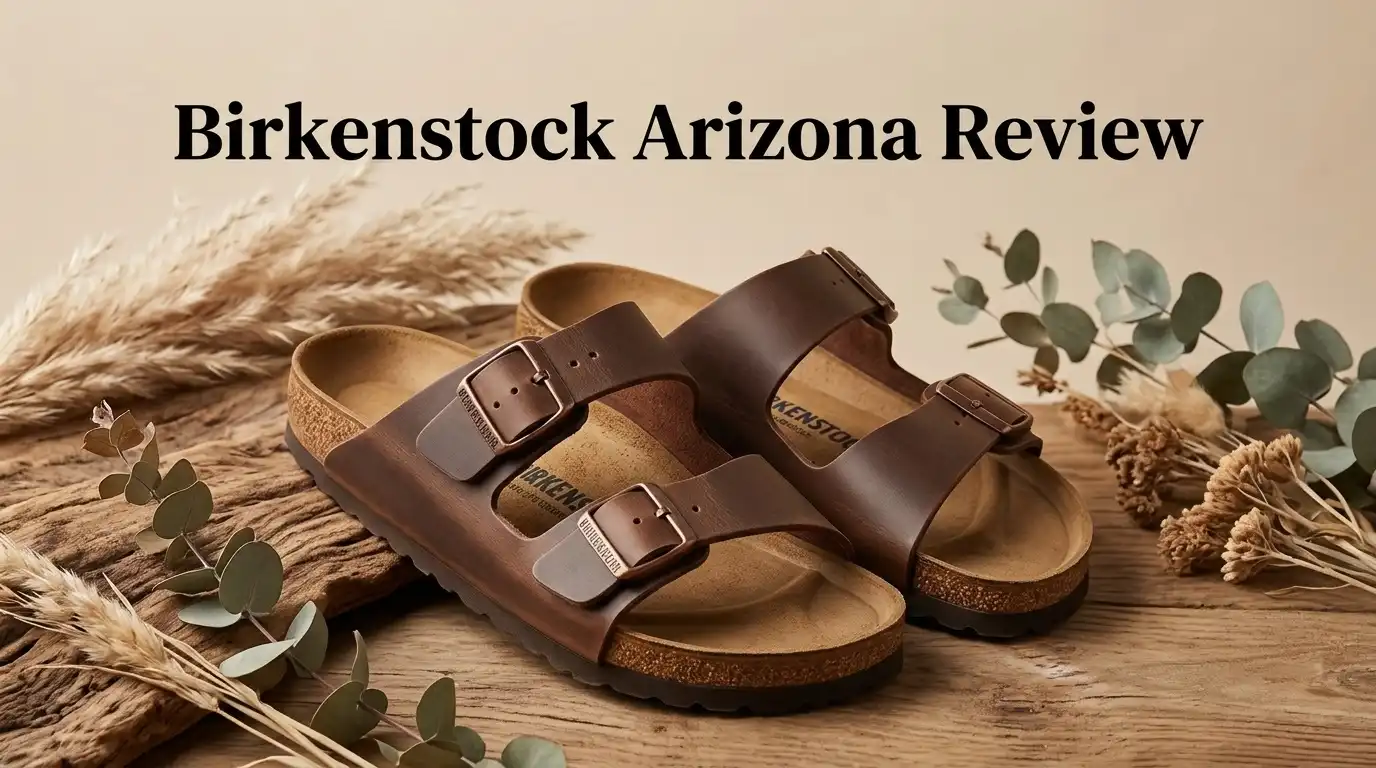
The Arizona is a two strap slide sandal with adjustable metal buckles. The upper sits on a contoured cork and latex footbed. Underneath that sits a flexible EVA outsole. The design has barely changed in fifty years, and that consistency is the point.
Birkenstock builds most Arizona pairs in Germany. The brand uses cork harvested from Portuguese oak trees, natural latex, and jute fiber layers. The footbed is the product. Everything else is a strap.
You can buy the Arizona in Birko Flor, suede, oiled leather, nubuck, or waterproof EVA. Prices in 2026 start near $60 for EVA and climb past $165 for premium leather. The classic Birko Flor version sits around $110 and remains the best entry point.
Unboxing Experience: First Impressions Out Of The Box
The box is plain brown cardboard with a small embossed logo. No tissue paper theater. No branded dust bag. Birkenstock spends money on the sandal, not the packaging.
My pair arrived wrapped in a thin paper sheet. The smell hit first, a mix of cork, glue, and leather that fans genuinely love. The footbed looked pale and chalky, almost unfinished. That matte surface is normal. It darkens with wear.
The straps felt stiff. The buckles felt cold and heavy, which is a good sign since they are real metal, not plastic. One small disappointment: my left buckle stamp sat slightly crooked. Minor cosmetic flaws appear on roughly one in five pairs based on owner reports. The sandal still functioned perfectly.
Design And Build Quality: Honest Construction Notes
The Arizona uses glued construction, not stitching, across the footbed layers. Birkenstock seals the cork with a jute and latex sandwich, then wraps the edge in a protective coating.
The craftsmanship looks industrial rather than luxurious. You will see glue residue along the inner footbed rim on many pairs. This is standard, not a defect. The cork edge sometimes shows tiny pits where the material compressed unevenly.
Strap attachment points are riveted and strong. In testing, the straps never loosened or pulled free. The weakest point is the outsole, which thins out at the ball of the foot after heavy daily use.
Build quality in 2026 remains solid for the price, though longtime owners argue the pairs made before 2015 felt denser and heavier.
The Cork Latex Footbed: Why It Feels Different
The footbed has four zones. A raised toe bar, a deep heel cup, a high arch support, and a raised outer edge. Each zone does a job.
The toe bar encourages your toes to grip slightly, which activates small foot muscles. The heel cup cradles your fat pad and spreads impact. The arch support stops your foot from collapsing inward.
Most sandals flatten your foot. The Arizona shapes it. That is why the first wear feels foreign if you come from flip flops.
Body heat and pressure slowly soften the cork. Over weeks, the footbed records your exact foot print. A molded Birkenstock footbed is effectively a custom orthotic you did not pay a podiatrist for.
Top 3 Alternative For Birkenstock Arizona

- The Original Recovery Footwear.
- Finding Your Size - For your perfect fit, consult the “size chart” link above. Wear a half size? In general, we recommend that women who wear a ½ size size UP, and men who wear a ½ size size DOWN
Last update on 2026-11-12 / Affiliate links / Images from Amazon Product Advertising API Some of the links on this website are affiliate links, which means that at no additional cost to you, I earn a commission if you click through and make a purchase. I only recommend products and services that I believe will add value to my readers. Thank you for your support!
OOFOS OOahh Recovery Slide
No products found.
Teva Original Universal Sandal
No products found.
Chaco Zcloud Sandal
Comfort And Break In Period: The Hard Truth
Day one felt like standing on a firm wooden shelf. The arch pressed into my foot in a way that bordered on uncomfortable. I walked two miles and felt a hot spot under my big toe joint.
Week two changed everything. The cork compressed, the arch stopped poking, and the sandal started feeling supportive instead of aggressive.
Expect 15 to 30 hours of wear before true comfort arrives. Short indoor sessions work best during this phase.
Some people never adapt. Those with very flat feet or very high arches sometimes find the fixed contour wrong for their anatomy. If the arch still hurts after three weeks, the Arizona is not your sandal, and no amount of patience will fix that.
Sizing Guide: How To Avoid A Return
Birkenstock uses EU sizing with two width options, regular and narrow. The US conversion printed on the box confuses almost everyone.
Measure your bare foot in centimeters while standing. Birkenstock publishes an insole length chart, and matching your measurement to insole length is the only reliable method.
Your heel should sit inside the heel cup with a small gap at the back. Your toes need roughly 5mm of space before the front lip. Toes touching the edge means the pair is too small.
Most men take their normal US size minus about 7 to reach EU. Most women subtract 31. Between sizes, size down rather than up, because a loose foot slides and ruins the molding process.
Birkenstock Arizona Soft Footbed Vs Regular Footbed

- Understanding Widths: Narrow accommodates Narrow to Regular widths. Regular accommodates Regular to Wide Widths.
- The Birkenstock Arizona Soft Footbed - Oiled Leather is a genuine classic that has been delighting people for decades. This simple sandal with two straps stands for timeless design and has long held cult status thanks to its comfort factor. With its
Last update on 2026-11-12 / Affiliate links / Images from Amazon Product Advertising API Some of the links on this website are affiliate links, which means that at no additional cost to you, I earn a commission if you click through and make a purchase. I only recommend products and services that I believe will add value to my readers. Thank you for your support!
The soft footbed adds a thin foam pad between your skin and the cork. That changes the experience significantly.
The regular footbed feels firm and molds deeply over time. It suits heavier wearers, workers on hard floors, and anyone who wants maximum structure.
The soft footbed feels plush immediately and shortens the break in period. It suits sensitive feet, diabetic feet, and people who find the standard arch too sharp.
The tradeoff is real. Foam compresses faster than cork, so the soft version loses some support after a few seasons. It also sits slightly tighter, so some wearers prefer a half size adjustment.
Choose regular for longevity. Choose soft for instant comfort.
Durability After One Year Of Real Wear
My pair logged roughly 400 miles across pavement, grass, and tile. The cork edge picked up scuffs within the first month. The footbed darkened into a glossy brown where my foot sits.
The suede lining wore thin at the heel strike point. The outsole lost tread depth at the forefoot but stayed intact.
Strap color faded slightly on the sun exposed side. No buckle failed. No strap tore.
The biggest change was depth. My toe and heel impressions are now visible from across the room, which is exactly how the design should age.
Expect two to four years from daily wear and five to eight years from seasonal wear. Birkenstock repair services can replace the outsole and footbed cover when either fails.
Arch Support And Foot Health Benefits
Podiatrists frequently recommend contoured footbeds for plantar fasciitis, flat feet, and general arch fatigue. The Arizona delivers that contour at a reasonable price.
Users with plantar heel pain often report relief because the deep heel cup limits fat pad spread. The arch support reduces strain on the plantar fascia during long standing shifts.
The sandal is not a medical device, though. It lacks motion control, cushioning for high impact activity, and heel elevation for Achilles problems.
People with neuropathy should approach carefully, since firm cork can create pressure points they cannot feel. Anyone with a diagnosed foot condition should check with a podiatrist before switching to Arizonas full time.
Style And Outfit Pairing In 2026
The Arizona crossed from crunchy to cool years ago and has stayed there. In 2026, the shape appears with socks, with tailored trousers, and with slip dresses.
Black Birko Flor reads sleek and urban. Taupe suede reads soft and neutral. Habana oiled leather develops a worn in patina that looks better every season.
The chunky silhouette balances wide leg jeans and midi skirts particularly well.
Styling limits exist. The Arizona does not work with formal suits, fitted dress pants, or anything structured and sharp. It is a casual sandal pretending to be versatile, and pushing it too formal always looks wrong.
What The Birkenstock Arizona Does Not Do Well
Water ruins them. Cork swells, suede stains, and the glue weakens. A single rainstorm can permanently mark a suede pair.
Traction is mediocre. The EVA outsole slips on wet tile, smooth stone, and polished floors.
The footbed gets dirty fast and holds odor once sweat soaks in. Light colored footbeds look grimy within weeks.
They offer almost no shock absorption, so concrete walking fatigues your legs faster than a cushioned sneaker.
They are heavy compared with modern foam sandals. They are noisy, slapping with each step. They offer zero heel security, so running is impossible.
And the price stings for a sandal with no stitching, no padding, and no waterproofing.
Care And Cleaning Tips That Actually Work
Brush the footbed with a dry suede brush weekly. Dust removal prevents the dark greasy buildup that forms over time.
For deep cleaning, mix a little mild soap with water, scrub the footbed lightly, then wipe and air dry away from direct sun. Never soak the sandal and never use a washing machine.
Treat the cork edge with cork sealer every six months. Sealed cork resists cracking and moisture.
Clean Birko Flor with a damp cloth. Clean suede with a dedicated suede eraser. Condition oiled leather twice a year.
Store them flat in a cool place, never in a hot car, because heat warps the footbed and loosens the adhesive.
Price And Value In 2026
Birkenstock raised prices again this year. EVA versions sit near $60. Birko Flor hovers around $110. Suede and leather land between $135 and $170. Soft footbed models add roughly $20 to $30.
That feels expensive for a strap and a cork slab. The value argument depends on lifespan.
A $110 sandal worn for four summers costs about $27 per year. A $35 sandal replaced annually costs more over the same period.
Resoling runs $50 to $90 through authorized repair services, which extends life further.
The Arizona earns its price through longevity and foot support, not through luxury materials or finishing.
Who Should Buy And Who Should Skip
Buy the Arizona if you stand for long hours, want real arch support, or need a sandal that lasts years instead of months. Nurses, teachers, chefs, and travelers consistently rate it highly.
Buy it if you like the look and accept a break in period.
Skip it if you need waterproof footwear, since cork and water are permanent enemies.
Skip it if you want instant cushioned comfort, because recovery slides deliver that better.
Skip it if you have very high arches, very wide feet without access to the wide fit, or a strong dislike of firm footbeds.
Skip it if you plan to walk 10 miles a day on concrete, because your calves will complain.
Pros And Cons Of The Birkenstock Arizona
Pros
- Cork latex footbed molds to your exact foot shape and creates custom support over time
- Deep heel cup and firm arch help with plantar fasciitis and all day standing fatigue
- Repairable construction, with resoling and footbed cover replacement available
- Adjustable twin buckles fit a wide range of instep heights
- Huge choice of materials and colors, from $60 EVA to premium oiled leather
- Timeless design that stays in style across every trend cycle
- Made in Germany with consistent, well controlled manufacturing
Cons
- Break in period of two to four weeks feels genuinely uncomfortable
- Cork and suede versions get destroyed by water and heavy rain
- Outsole grip is weak on wet, smooth surfaces
- Footbed stains, darkens, and can hold odor
- Confusing EU sizing causes frequent returns
- No shock absorption for long concrete walks
- Price increases each year while materials stay basic
- Occasional cosmetic flaws such as glue residue or crooked stamps
Final Verdict: Should You Buy In 2026?
The Birkenstock Arizona remains one of the smartest footwear purchases available, with clear conditions attached.
You are buying a support system, not a comfort cloud. You are buying patience, because the first weeks are rough. You are buying longevity, because these outlive almost every competitor.
I rate the Arizona 4.4 out of 5. Points come off for water vulnerability, weak traction, and rising prices.
If you work on your feet or struggle with arch pain, this sandal will change your summers. If you want a sandal you can throw in a lake and forget about, buy the EVA version instead and save your leather pair for dry days.
Frequently Asked Questions
How long do Birkenstock Arizonas last?
Daily wearers typically get two to four years. Seasonal wearers often reach five to eight years. Resoling extends that significantly, and many owners report pairs lasting over a decade with regular cork sealing and professional repairs.
Do Birkenstock Arizonas run big?
Yes, they generally run large. Birkenstock sizes in EU increments only, so each step covers a wider range than US sizing. Measure your foot in centimeters and match it to the official insole length chart before ordering.
Can you wear Birkenstock Arizonas in water?
Only the EVA version. Cork, suede, and leather models absorb water, swell, stain, and weaken at the glue lines. One heavy rain exposure can permanently mark suede uppers.
Is the soft footbed worth the extra cost?
It depends on your feet. The soft footbed suits sensitive, diabetic, or arch shy feet and feels comfortable immediately. The regular footbed lasts longer and molds more deeply, which suits heavier wearers and long shifts.
How do you break in Birkenstock Arizonas faster?
Wear them indoors for one to two hours daily during the first two weeks. Short sessions let the cork compress gradually without creating blisters. Avoid long walks until the footbed shows your heel and toe impressions.
Are Birkenstock Arizonas good for plantar fasciitis?
Many users report relief because the deep heel cup and firm arch reduce strain on the plantar fascia. Results vary by foot shape, so anyone with ongoing heel pain should consult a podiatrist first.
What is the difference between Birko Flor and leather?
Birko Flor is a synthetic material with a felt backing. It costs less, resists stains, and needs little care. Leather costs more, breathes better, softens faster, and develops a personal patina over time.

Hi, I’m Sabine Drummond, a fashion lover and the style curator behind FashionReviewz.blog, where I personally test and review the hottest fashion finds available on Amazon. Join me on this fashion journey as I uncover the hidden gems and help you avoid the fashion fails, one honest review at a time.