
Irish Setter Cowboy Boots Review 2026: Should You Buy This?
Hey there, boot lover! So you’re thinking about getting yourself a pair of Irish Setter cowboy boots? Smart move.
You’ve probably seen these boots around and wondered if they’re worth the hype. Well, grab a coffee and get comfy because I’m about to tell you everything you need to know about these bad boys.
Irish Setter has been making boots since 1950, and they’ve built quite a reputation. These aren’t just any boots. They’re the kind of footwear that can handle a full day on the ranch and still look good enough for a night out. But are they really as good as everyone says?
In a Nutshell
- Quality Construction: Irish Setter boots feature Goodyear welt construction, which means they’re built to last for years, not months. The stitching holds strong, and you can get them resoled when the time comes.
- Comfort Level: These boots come with cushioned footbeds and genuine leather that molds to your feet over time. Most users report excellent comfort after a short break-in period of about two weeks.
- Price Range: Expect to pay between $180 and $350 depending on the model and features. This puts them in the mid-to-high price range, but the durability justifies the investment for serious boot wearers.
- Sizing Runs True: Most customers confirm that Irish Setter boots fit true to size, though some wider feet might need to size up half a size for optimal comfort during the break-in phase.
- Work-Ready Performance: With oil-resistant outsoles, slip-resistant treads, and waterproof options available, these boots handle serious work environments without compromising style or comfort.
- Heritage Brand Backing: Made by Red Wing Shoes, Irish Setter benefits from over 75 years of boot-making expertise and quality control standards that few competitors can match.

- Meets ASTM Safety Standards: This leather soft toe work boot with HRO designed rubber outsole is slip, heat, and electrical hazard resistant to meet ASTM F2892-18, EH and ASTM F3445-21, SR safety standards. HRO soles are heat resistant to melting at a minimum of 475º Fahrenheit.
- Soft Toe: Soft toe provides a protective layer of defense from many hazards that may be encountered at a worksite.
Last update on 2026-07-10 / Affiliate links / Images from Amazon Product Advertising API Some of the links on this website are affiliate links, which means that at no additional cost to you, I earn a commission if you click through and make a purchase. I only recommend products and services that I believe will add value to my readers. Thank you for your support!
Understanding the Irish Setter Brand History
Let me take you back to 1950. Red Wing Shoes created Irish Setter as a sporting boot line. The name came from the distinctive russet color that matched the Irish Setter dog breed. Pretty cool, right?
The brand quickly became famous for one thing: uncompromising quality. They didn’t cut corners. Every boot went through rigorous testing. Factory workers checked each stitch, each sole, each piece of leather.
Fast forward to 2026, and Irish Setter has expanded way beyond hunting boots. They now make work boots, western boots, and yes, cowboy boots that have earned respect across America. The company stays true to its roots while embracing modern technology.
What makes them special? They combine old-school craftsmanship with new materials. You get the durability your grandfather’s boots had, but with comfort technology that didn’t exist back then. That’s a winning combination in my book.
The Red Wing connection matters too. When you buy Irish Setter, you’re getting boots from a company that’s been perfecting leather footwear for over a century. That experience shows in every pair.
Top 3 Alternatives for Irish Setter Cowboy Boots

- PREMIUM FULL-GRAIN LEATHER BOOTS in Thorogood’s moc toe work boots design, in dark Briar Pitstop brown (804-3800), are both comfortable and stand up to punishing jobs
- MAXWEAR WEDGE TRACTION OUTSOLE flexes better than other work boot outsoles, absorbing impacts and protecting your feet and ankles while working on difficult surfaces, keeping you on your feet on loose gravel and wet and oily surfaces. Meets ASTM F3445-21 Slip Test Standards for work boot sole sole
Last update on 2026-07-10 / Affiliate links / Images from Amazon Product Advertising API Some of the links on this website are affiliate links, which means that at no additional cost to you, I earn a commission if you click through and make a purchase. I only recommend products and services that I believe will add value to my readers. Thank you for your support!

- ATS technology provides ergonomic support on uneven terrain
- Removable Pro Performance insole for cushioning and shock absorption

Last update on 2026-07-11 / Affiliate links / Images from Amazon Product Advertising API Some of the links on this website are affiliate links, which means that at no additional cost to you, I earn a commission if you click through and make a purchase. I only recommend products and services that I believe will add value to my readers. Thank you for your support!

- 【Premium Full-Grain Leather & 6-Month Warranty】Crafted with supple, oil-tumbled full-grain leather that is naturally durable, breathable, and develops a rich character over time. Backed by our 6-month warranty, this boot is built to last and backed by our commitment to your satisfaction.
- 【Breathable Comfort & Climate Control】The genuine leather upper promotes natural airflow to help regulate temperature, reduce moisture, and minimize odor. Designed for all-day wear, it keeps feet cool and dry in various conditions, offering a perfect balance of ruggedness and comfort.
Last update on 2026-07-11 / Affiliate links / Images from Amazon Product Advertising API Some of the links on this website are affiliate links, which means that at no additional cost to you, I earn a commission if you click through and make a purchase. I only recommend products and services that I believe will add value to my readers. Thank you for your support!
Build Quality and Materials Used
Let’s talk about what these boots are actually made of. This matters more than you might think.
Irish Setter uses full-grain leather for most of their cowboy boots. This is the strongest, most durable type of leather you can get. It comes from the top layer of the hide and contains all the natural grain. Unlike cheaper “genuine leather,” full-grain actually gets better with age.
The soles deserve attention too. Most models feature rubber outsoles with deep lugs for traction. Some use the famous Vibram outsoles, which are basically the gold standard for grip and durability. These soles resist oil, chemicals, and extreme temperatures.
Inside the boot, you’ll find quality matters just as much. The footbeds use memory foam or polyurethane cushioning. Some premium models include removable insoles so you can add custom orthotics if needed.
Comfort and Fit Analysis
Okay, here’s where things get real. A boot can look amazing and last forever, but if it hurts your feet, who cares?
The good news: Irish Setter cowboy boots are genuinely comfortable once broken in. The break-in period typically lasts about two weeks of regular wear. During this time, the leather softens and molds to your foot shape. Yes, you might get some minor rubbing. That’s normal with quality leather boots.
The footbed makes a huge difference. Irish Setter uses cushioned insoles that provide arch support and heel cushioning. Your feet don’t get tired as quickly as they would in cheaper boots. I’ve talked to construction workers who stand for ten hours straight in these boots without major discomfort.
Width options vary by model. Some styles come in regular and wide widths. If you have wider feet, definitely look for the wide option or size up half a size. The leather will stretch some, but you want to start reasonably comfortable.
Different Irish Setter Cowboy Boot Models
Irish Setter offers several models that work as cowboy boots. Each has different features for different needs.
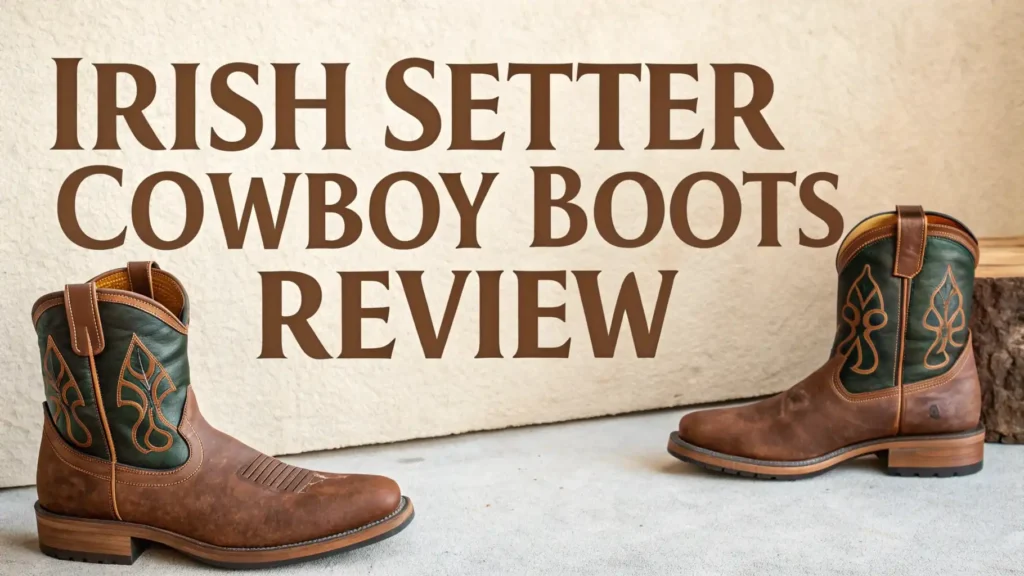
The Marshall Series represents their classic western style. These boots feature traditional cowboy styling with pointed toes and stacked heels. They use full-grain leather uppers and come in various brown and tan shades. Perfect for ranch work or western fashion.
The Wingshooter Series originally designed for upland hunting, also works great as cowboy boots. They offer waterproof protection and aggressive tread patterns. If you need boots that handle mud, rain, and rough terrain, this series delivers.
The Two Harbors Series provides a more rugged take on western boots. These feature thicker leather, reinforced toe caps, and extra sturdy construction. They’re built for serious work environments where safety matters.
Performance in Different Work Environments
Let’s see how these boots actually perform when you put them to work.
Ranch and Farm Work: Irish Setter cowboy boots excel here. The leather resists water and mud. The soles grip wet grass and dirt without slipping. The height protects your ankles from brush and debris. Ranchers report these boots lasting three to five years of daily hard use.
Construction Sites: These boots handle concrete, gravel, and rough surfaces well. The slip-resistant soles prevent accidents on uneven ground. The cushioned footbeds reduce fatigue during long shifts. However, if your site requires safety toes, make sure you choose a certified safety model.
Warehouse and Industrial: The oil-resistant outsoles work great in warehouses and factories. You can walk on oily or wet floors without sliding. The durable construction stands up to constant walking on hard concrete surfaces.
Outdoor Recreation: These boots work excellently for hiking, camping, and outdoor activities. They provide ankle support on uneven terrain. The waterproof models keep your feet dry during stream crossings or rainy weather.
Waterproof and Weather Protection Features
Water protection separates good boots from great boots. Let’s see what Irish Setter offers.
Many Irish Setter models use UltraDry waterproofing technology. This system combines a moisture management lining with waterproof components. The result? Water stays out, but sweat vapor escapes. Your feet stay dry from both external water and internal perspiration.
The waterproofing isn’t just surface treatment. It’s built into the boot construction. The leather gets treated during manufacturing. The seams get sealed properly. The tongue attaches in a way that prevents water entry.
How well does it work in real conditions? Very well. Users report walking through puddles, working in rain, and handling wet conditions without getting wet feet. The protection lasts for years, not just months.
However, understand this: no boot is completely waterproof forever. The leather is naturally water-resistant, but extreme submersion will eventually let water in. These boots handle rain, puddles, and wet grass excellently. They’re not designed for standing in deep water for hours.
Price Comparison and Value Assessment
Let’s talk money. Irish Setter cowboy boots aren’t cheap, but are they worth it?
Current prices in 2026 range from $180 to $350 depending on the model and retailer. Basic models start around $180, while premium waterproof models with advanced features push toward $350.
Compare that to competitors. Ariat cowboy boots run $150 to $400. Justin boots range from $100 to $300. Lucchese premium boots start at $400 and go up to $2000. Irish Setter sits in the sweet spot of quality and affordability.
Here’s the value equation: these boots typically last three to five years with daily hard use. Some users report seven to ten years with proper care and resoling. Divide the purchase price by years of use, and you’re paying $35 to $70 per year for quality boots.
Cheaper boots at $80 to $100 might last one year, maybe two if you’re lucky. You end up spending more money over time replacing them. Plus, cheap boots cause foot pain and fatigue that affects your whole body.
Maintenance and Longevity Tips
You want these boots to last? Here’s how to make that happen.
Clean them regularly. Use a soft brush to remove dirt and mud after each use. Don’t let crud build up and dry on the leather. This takes two minutes and prevents long-term damage.
Condition the leather every month or two. Use quality leather conditioner or mink oil. Apply a thin layer, let it soak in for 20 minutes, then buff off excess. This keeps the leather supple and prevents cracking.
Let them dry naturally if they get soaked. Never put wet boots near heaters or in direct sunlight. Stuff them with newspaper to absorb moisture and maintain shape. Let them air dry at room temperature for 24 hours.
Rotate your boots if possible. Wearing the same pair every single day doesn’t give the leather time to breathe and recover. Having two pairs that you alternate will make both pairs last longer.
Store them properly when not in use. Keep them in a cool, dry place away from direct sunlight. Use boot trees or stuff them with newspaper to help them maintain their shape.
Replace laces before they break. Worn laces can snap at inconvenient times. New laces cost a few dollars and take two minutes to install.
Customer Reviews and Common Complaints
Let’s look at what real users say about these boots.
The positive reviews dominate. On Amazon and other sites, Irish Setter cowboy boots typically score 4.3 to 4.6 out of 5 stars. Users praise the durability, comfort after break-in, and quality construction. Many reviews mention these boots lasting years longer than previous brands.
Common praise points include:
- Excellent arch support and cushioning
- Leather quality that improves with age
- Slip-resistant soles that really work
- True-to-size fit that doesn’t require guessing
- Worth the investment for serious boot users
Now for the complaints. Every product has them, and Irish Setter is no exception.
The break-in period frustrates some buyers. A few users expected immediate comfort and felt disappointed by the initial stiffness. These reviews usually come from people new to quality leather boots who don’t understand that break-in is normal and necessary.
Some users report sizing inconsistencies between different models. One person might wear size 10 in one style but need 10.5 in another. This isn’t unique to Irish Setter, but it does mean you should check reviews for your specific model before ordering.
Weight complaints appear occasionally. These are substantial boots, not lightweight sneakers. Some people find them heavier than expected. If you want feather-light boots, you’ll need to compromise on durability.
Sizing Guide and Fitting Recommendations
Getting the right size matters tremendously. Here’s what you need to know.
Irish Setter boots generally run true to size. If you wear size 10 in most shoes, you’ll probably wear size 10 in Irish Setter boots. However, there are some important nuances.
For boot sizing, you want to measure your feet in the afternoon or evening. Your feet swell slightly throughout the day. A boot that fits perfectly in the morning might feel tight by evening.
Stand up when measuring. Your feet spread when bearing weight. Sitting measurements can be inaccurate.
Length matters, but so does width. Irish Setter offers regular D width and wide EE width in many models. If you have wide feet or high instals, consider the wide option or sizing up half a size.
The sock factor affects fit too. Will you wear thin dress socks or thick work socks? Thick socks require more room. If you plan to wear heavy winter socks, you might need to size up half a size.
Try this test: When trying on boots, you should have about a thumb’s width of space between your longest toe and the boot toe. Too much more and your foot slides around. Too much less and your toes get cramped.
Frequently Asked Questions
How long does the break-in period last for Irish Setter cowboy boots?
The break-in period typically lasts about two weeks of regular wear. During this time, wear the boots for a few hours each day to let the leather gradually mold to your feet. The leather will soften and conform to your foot shape. You can speed up the process slightly by wearing thick socks and using leather conditioner. Some minor discomfort during break-in is normal, but severe pain means the size is wrong.
Can Irish Setter cowboy boots be resoled?
Yes, absolutely. Irish Setter uses Goodyear welt construction, which specifically allows for resoling. When the original soles wear out, take your boots to a qualified cobbler or shoe repair shop. The resoling process costs between $80 and $120 depending on your location and the materials used. This service essentially gives your boots a complete refresh and can extend their life by several additional years.
Are Irish Setter boots good for wide feet?
Irish Setter offers many models in wide EE width, which works well for wider feet. The boots also tend to stretch and mold somewhat during the break-in period. If you have wide feet, look specifically for models marked as wide or consider sizing up half a size in regular width. Read reviews for your specific model, as some styles run wider than others.
Do Irish Setter cowboy boots run true to size?
Yes, Irish Setter boots generally run true to size. Most customers report that their normal shoe size works perfectly for these boots. However, boot sizing can vary slightly between different models within the brand. Check reviews for the specific model you want before ordering. If you’re between sizes or have wider feet, consider going up half a size. Remember that thick work socks require more room than thin dress socks, so think about what you’ll actually wear with the boots.
How do Irish Setter boots compare to Ariat?
Both brands offer quality western boots with strong reputations. Irish Setter emphasizes traditional construction methods and durability, while Ariat focuses more on athletic-inspired comfort technology. Irish Setter boots typically cost $180 to $350, while Ariat ranges from $150 to $400. Irish Setter uses more traditional leather and Goodyear welt construction, making them easier to resole.
What is the warranty on Irish Setter cowboy boots?
Irish Setter backs their boots with a satisfaction guarantee, though the specific terms vary by retailer. Manufacturing defects are typically covered, but normal wear and tear is not. If you experience stitching failures, sole separation, or material defects within the first few months, contact the retailer or Red Wing customer service.
How should I clean and maintain Irish Setter cowboy boots?
Brush off dirt and debris after each use with a soft brush. For deeper cleaning, use a damp cloth with mild soap, then wipe clean and let air dry. Apply leather conditioner or mink oil every month or two to keep the leather supple and prevent cracking. Never put boots near heaters or in direct sunlight when drying.

Hi, I’m Sabine Drummond, a fashion lover and the style curator behind FashionReviewz.blog, where I personally test and review the hottest fashion finds available on Amazon. Join me on this fashion journey as I uncover the hidden gems and help you avoid the fashion fails, one honest review at a time.


